
62% of Large Companies Are Building AI Agents. Who Is Designing Them?
Most agentic AI conversations start in the engineering team and stay there. That is the first mistake.
KPMG’s Q3 2026 AI Pulse Survey found that 62% of large US organizations are now building, deploying or developing AI agents, up from 53% a quarter earlier. Gartner expects more than 40% of agentic AI projects to be canceled by the end of 2027.
Not because the technology isn’t ready. Because the people who understand the work (HR, finance, operations and sales) are rarely in the room when the agent is designed.
This guide covers where agentic AI is heading, what it means for teams without a technical background, and how to put your first agent to work in 90 days.
Quick answer: What is agentic AI? Agentic AI is software built on large language models that pursues a goal across multiple steps. It reads live signals, plans, uses tools such as your CRM or ERP, takes action and learns from feedback, while humans approve the decisions that matter. A chatbot answers a question. An agent finishes a job.
Key Takeaways
- Agents are moving from pilot to production. Gartner expects 40% of enterprise applications to include task-specific agents by the end of 2026, up from under 5% in 2025.
- The biggest risk is organizational, not technical. Gartner ties expected cancellations to escalating cost, unclear business value and weak risk controls.
- Business teams are the missing ingredient. The people who know where work breaks should write the agent brief.
- Humans stay in charge. Winning organizations define which decisions an agent may never make alone.
- Start with one workflow. A focused 90-day pilot beats a year of experiments.
What Is Agentic AI, and How Is It Different From ChatGPT or RPA?
Three technologies get confused constantly. Here is the difference.
| Feature | Generative AI Assistant | Rule-Based Automation (RPA) | Agentic AI |
|---|---|---|---|
| What it does | Answers, drafts and summarizes on request | Repeats a fixed script | Pursues a goal across multiple steps |
| Trigger | A person writes a prompt | A schedule or fixed event | Live signals and a defined goal |
| Unexpected situations | Waits for your next prompt | Breaks or stops | Re-plans, retries or escalates to a human |
| Memory and learning | Limited to the conversation | None | Retains context and feedback |
| Human role | Operates every step | Maintains the script | Sets goals and approves key decisions |
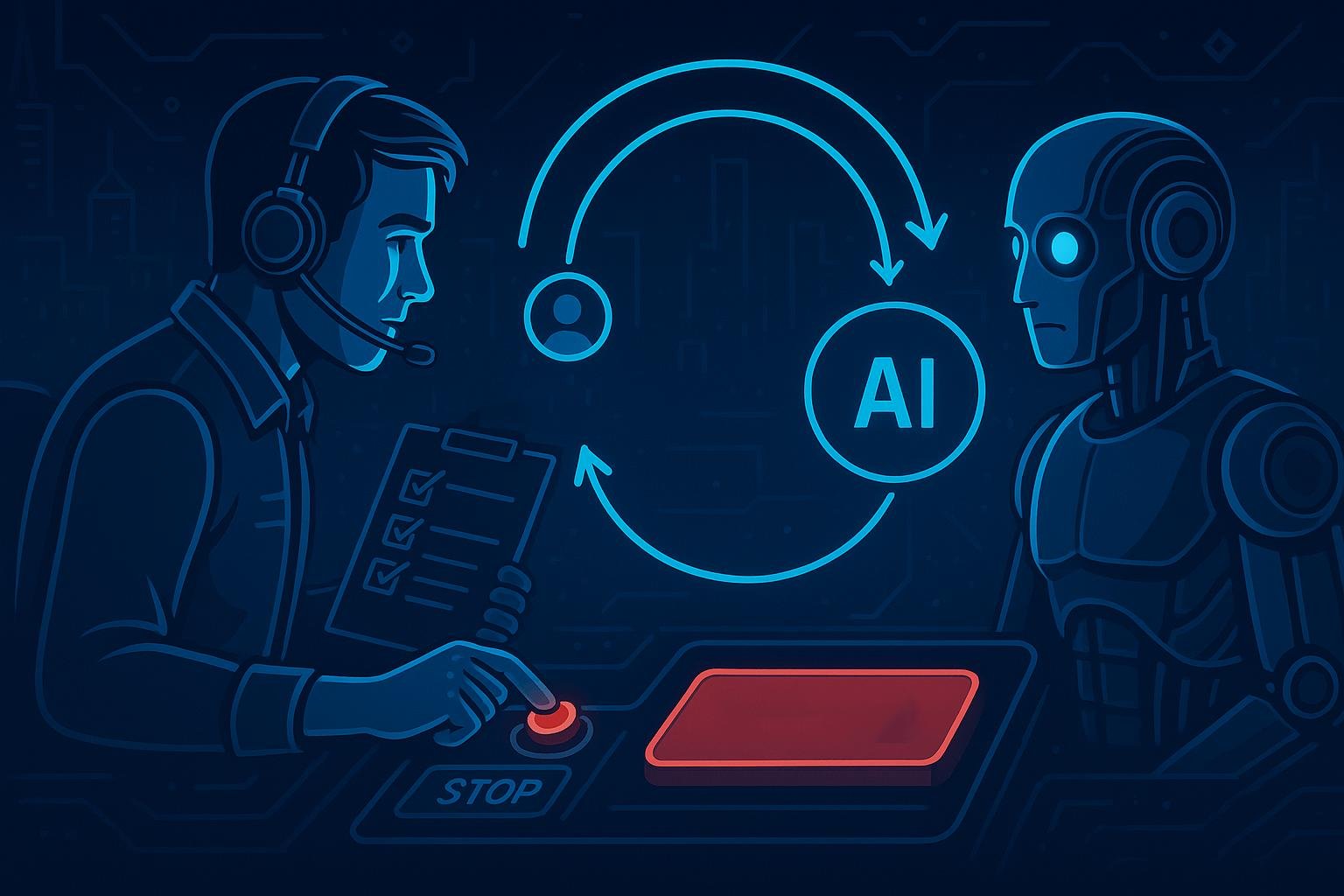
At Swabhav we describe the agent loop in four words: signal → decision → action → feedback. A good agent notices what is changing in your systems, chooses the next best action, executes it through approved tools, and learns from the outcome. Humans set direction and review anything that carries risk.

How an agentic AI system moves from signals to decisions, actions and feedback.
Where Is Agentic AI Headed? The Data Behind the Shift
The numbers tell a story of fast adoption and uneven results.
| Metric | Figure | Source |
|---|---|---|
| Enterprise apps with task-specific agents by end of 2026 | 40% (up from under 5% in 2025) | Gartner, Aug 2025 |
| Enterprise software including agentic AI by 2028 | 33% (up from under 1% in 2024) | Gartner |
| Day-to-day work decisions made autonomously by 2028 | At least 15% (up from 0% in 2024) | Gartner |
| Large US organizations building or deploying agents | 62% in Q3 2026 | KPMG |
| Organizations developing multi-agent systems | 25%, up from 6% | KPMG |
| Organizations scaling agents somewhere in the business | 23%, but no more than 10% in any single function | McKinsey, State of AI 2025 |
| Agentic AI projects expected to be canceled by end of 2027 | Over 40% | Gartner, Jun 2025 |
| India GCCs investing in agentic AI | 58%, with another 29% planning to scale within a year | EY India GCC Pulse 2025 |
The Catch: Hype and Cancellation on the Same Chart
Both things are true at once. Agents are spreading quickly, and many projects will not survive. Gartner has also warned about “agent washing,” estimating that only about 130 of the thousands of vendors claiming agentic capabilities are building the real thing.
Look at the three causes Gartner names: cost, unclear value and risk controls. None of them is a model problem. They are management problems, and they echo what we wrote in The GenAI Divide: MIT found 95% of GenAI pilots produced no measurable P&L impact because the workflow never changed, only the demo did.
Five Trends Shaping Agentic AI Over the Next 24 Months
- From single agents to agent teams. Multi-agent development jumped from 6% to 25% of organizations in KPMG’s latest survey. Expect manager, worker and reviewer agents that hand tasks to each other, much like a human team. Business leaders will need to design those roles and handoffs deliberately.
- Agents arrive inside software you already own. If Gartner is right, your HR system, CRM and finance tools will ship with agents whether or not you planned for them. Non-technical buyers will need the skills to test what is real and what is a relabeled chatbot.
- Open standards make agents interoperable. The Model Context Protocol (MCP), which connects agents to tools, and Agent2Agent (A2A), which lets agents talk to each other, now sit under the Linux Foundation’s Agentic AI Foundation. Less vendor lock-in is good news. Permissions, logging and audit design still matter.
- Governance becomes part of the product. KPMG reports that 74% of large organizations now include cost reviews in AI approvals and 49% have defined high-risk use cases where agents may not decide autonomously. Autonomy is being rationed, not maximized.
- Skills become the bottleneck. Significant workforce adoption of AI rose to 44% of organizations in KPMG’s Q3 survey, from 10% a year earlier. In KPMG’s banking cut, 61% of leaders said employees who use AI effectively outperform their peers. We explored this shift in How Generative AI Is Reshaping the Workforce.
How Can Non-Technical Teams Use Agentic AI?
Start where work is repetitive, data-rich and reversible. The table shows what an agent can do in each function and where a human must stay in control.
| Function | What an agent can do | Where a human must decide |
|---|---|---|
| HR and Talent | Run onboarding (access, scheduling, policy questions), map skills to roles | Hiring, promotion and exit decisions |
| Finance | Match invoices, flag variances, chase approvals, draft month-end commentary | Payments above thresholds, postings, audit sign-off |
| Sales and Marketing | Research accounts, prioritize leads, draft follow-ups, keep the CRM clean | Pricing, discounts, contract terms |
| Operations and Supply Chain | Watch signals across TMS, ERP and MES, flag delays, route exceptions | Safety-critical calls, vendor changes |
| Customer Support | Resolve routine cases end to end, escalate with full context | Refunds beyond policy, sensitive complaints |
| Leadership | Turn scattered data into a “what should we do next” brief | Strategy and capital allocation |
How AI agents can support different business functions while humans retain decision authority.
The evidence points the same way. Infosys’ AI-first GCC Index 2026 found agentic AI adoption highest in sales and marketing (61%) and customer service (58%) across Indian GCCs. In a survey of 151 HR and L&D leaders in India, HR ranked second among functions adopting agentic AI, at 41%. KPMG’s asset-management data shows agents most deployed across risk, compliance, finance and operations. Gartner has even projected that agentic AI could resolve 80% of common customer service issues autonomously by 2029.
The pain is real. Swabhav’s Agentic AI Masterclass research estimates that knowledge workers lose 12.5+ hours a week stitching data across systems, with decisions often touching five or more tools. Agents attack exactly that gap.
Why Business Teams, Not Just IT, Must Lead
MIT’s research found that winners decentralize adoption, empowering line managers and power users instead of leaving everything to a central IT lab. External partnerships also succeeded about 67% of the time, against roughly 33% for internal builds.
Gartner’s analysts make a related point: many agentic projects start from a technology capability (“we can do this”) rather than a measured business problem (“we lose this much because of that”). Only the business team can supply the second half.
The good news is that you do not need to code. You need to write a clear brief. Use this one-page template.
The 6-Part Agent Brief
- Goal: What outcome should the agent own? (Example: close vendor invoice queries within 24 hours.)
- Signals: What data or events should trigger it?
- Actions: Which tools and systems may it use, and what may it change?
- Guardrails: What must it never do? What is the spending or risk limit?
- Human checkpoints: Which decisions go to a person, and who?
- Success metric: How will you know it works? (Time saved, error rate, cycle time, cost per case.)
If your team can fill this in, engineers can build from it. If it cannot, no amount of model power will save the project.
How to Start: A 90-Day Playbook for Non-Technical Teams
First, Run the 5-Question Agent-Ready Test
A workflow is a strong first candidate if you can answer yes to most of these:
- Does it repeat at least weekly?
- Does the data live in systems an agent can securely access?
- Can you define what “good” looks like in numbers?
- Is a mistake reversible or low-cost?
- Is there a named business owner?
Days 1 to 30: Find and Frame
Map the decisions your team makes each week. Shortlist three to five candidates, score them with the test above, and pick one flagship workflow. Write the 6-Part Agent Brief. Check data readiness now: in KPMG’s banking cut, 80% of leaders named data readiness and access as the top barrier to agent deployment.
Days 31 to 60: Design and Pilot
Build the agent with human checkpoints and run it alongside the existing process. Let real users correct it. Log every action and set a cost budget from day one.
Days 61 to 90: Prove and Decide
Compare results against your success metric. Decide to scale, fix or stop, with a named owner and an explicit “not now” list. MIT found top mid-market performers reached full implementation in about 90 days, while large enterprises often took nine months or more. Speed beats size.
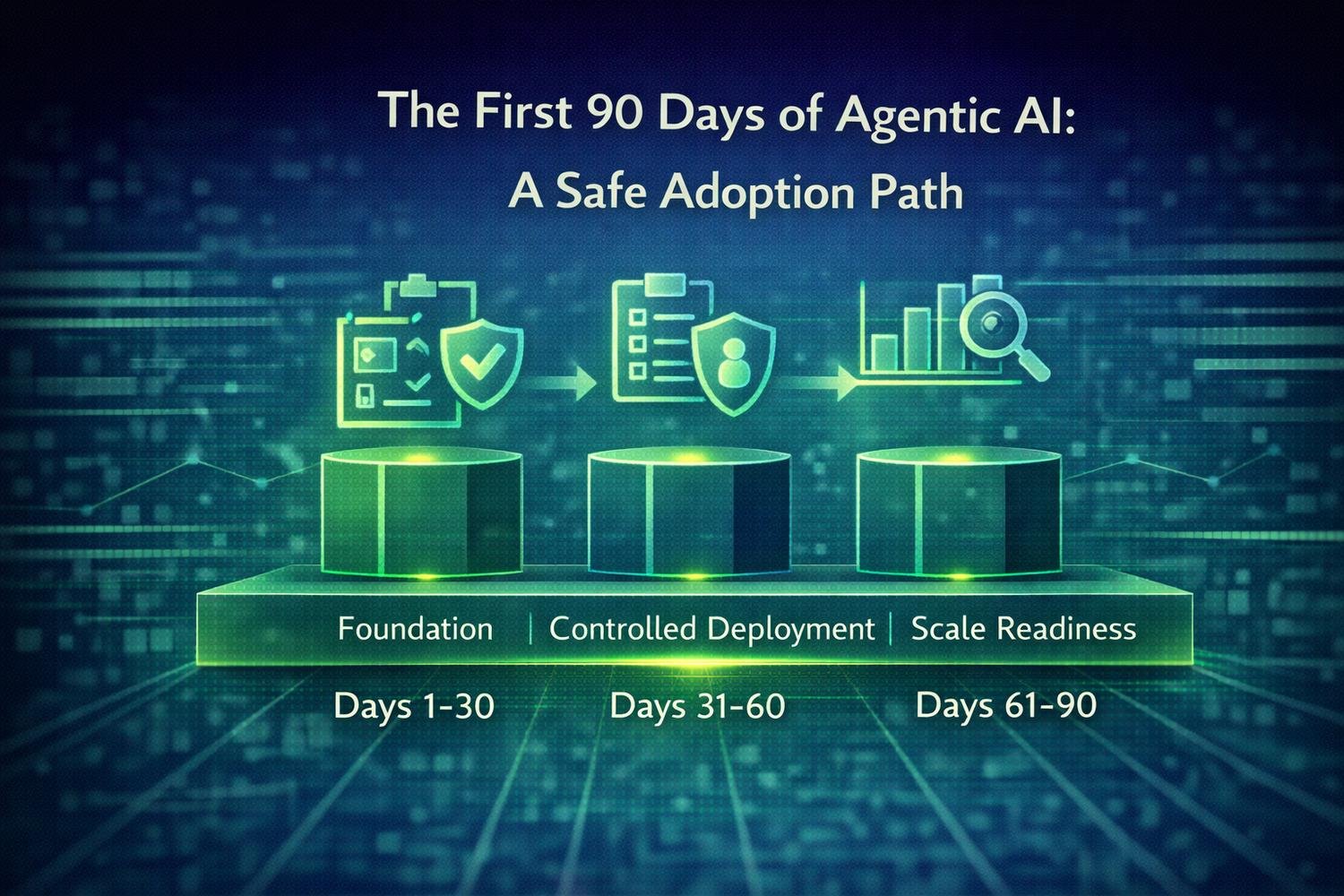
A practical 90-day roadmap for moving from workflow discovery to an AI agent pilot and measurable results.
What Can Go Wrong, and How to Prevent It
- Agent washing. Ask vendors to show the loop: what signal triggers it, what action it takes, and how it learns.
- Dirty or fragmented data. Agents act on what they can see. Fix access and definitions first.
- Too much autonomy, too soon. Start with approval-required actions and widen only as trust is earned.
- Shadow AI. MIT found employees at about 90% of surveyed companies already use personal AI accounts at work. Learn from that behavior instead of banning it.
- No owner. An agent without a business owner becomes an orphaned experiment.
- Cost creep. Usage-based pricing adds up. Set token and cost budgets early.
Where Swabhav Techlabs Fits In
We built our AI practice around one belief: agents should be designed by the people who run the work, with engineers building what business teams define. Here is how our offerings map to the journey.
Align your leaders: AI for Business Leaders turns “we should do AI” into a portfolio of three to five high-ROI use cases with owners, guardrails and a build-versus-buy view.
Skill the team that will own the first agent: The Agentic AI Masterclass brings business, tech and HR into one room (12 to 25 people works best). You leave with an agent playbook, a shortlist of 3 to 5 agentic bets, one flagship agent blueprint with human checkpoints, and a 90-day launch plan. The curriculum covers feasibility, tooling, orchestration, MCP-based connectivity and multi-agent design.
Build and integrate: Our Technology and AI Consulting practice helps you operationalize agentic AI in sales, operations, finance and HR, build the data and AI platform underneath, and make the organization AI-first.
Build capability at scale: AI Programs include AI for Operations and Efficiency, AI for Talent and Learning Leaders and custom capability design. Our Talent Consulting and Corporate Fresher Training services help you grow AI-ready people, not just AI-ready systems.
The results show up in the numbers. In our case studies, a global financial services group moved from static dashboards to an agentic intelligence layer for revenue and risk, and a MarTech company rebuilt its sales engine with predictive AI for 3X deal conversion and a 50% shorter sales cycle.
Explore our case studies to learn more.